
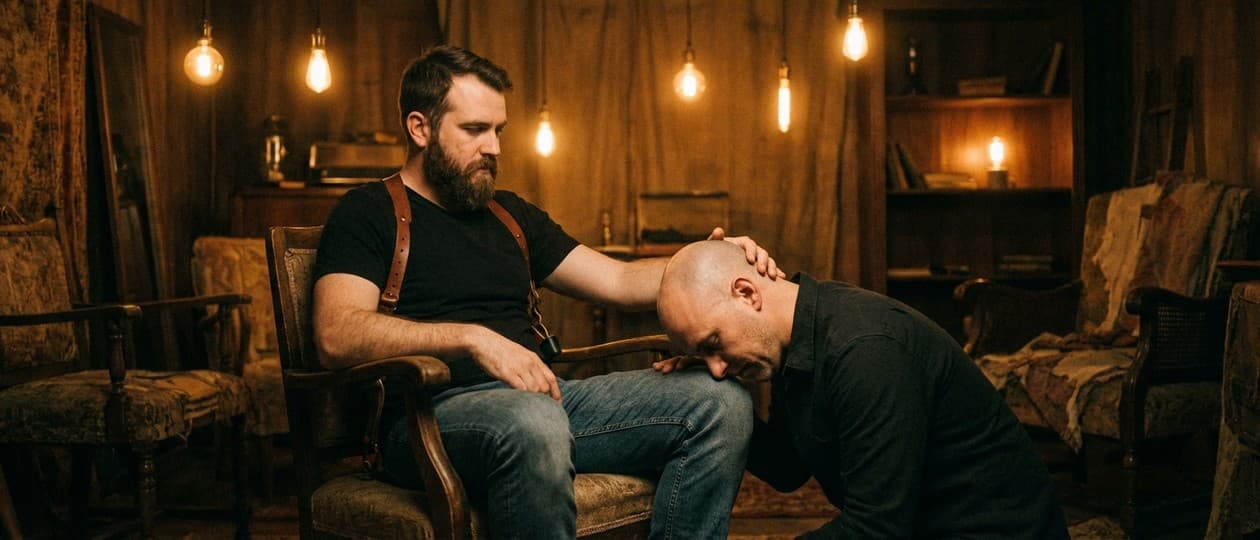
BDSMPact contracts are symbolic documents for communication and negotiation between consenting adults. They are not legally binding. Consent can be withdrawn at any time by any partner.
What Is a Gay BDSM Contract?
A gay BDSM contract is a written agreement between male partners that defines how their power exchange works in practice. It covers roles, boundaries, safety protocols, aftercare, and the day-to-day rhythm of the dynamic. Like any dom sub contract, it puts your negotiated agreements on paper so both partners have a shared reference point.
What makes a gay BDSM contract distinct is not the structure but the context. M/M dynamics exist within a community that has its own history, vocabulary, and traditions. The gay leather scene, pup culture, daddy/boy dynamics, bear community, and contest culture all carry specific meanings that generic templates tend to flatten or ignore entirely. Your contract should reflect the world you actually move through.
This is a document you write together. Not something one partner drafts and the other signs. The negotiation process is where trust gets built, and that process happens between equals regardless of what roles you take on once the agreement is active.
Why Gay Men Benefit from a Written Agreement
Gay kink has deep roots in oral tradition. Leather elders passed down knowledge through mentorship, bar culture, and community events. That tradition matters and should be preserved. But a written gay dom sub agreement adds something that conversation alone cannot: a record.
Memory is unreliable around emotionally charged discussions. Two months from now, you and your partner may recall the same negotiation differently. A written contract holds you both accountable and gives you something concrete to revisit during check-ins.
Writing things down also forces specificity. Saying "I want to serve" during a hookup is different from documenting which acts of service you consent to, which ones you want to explore gradually, and which ones are permanently off the table. A written contract removes the ambiguity that leads to misunderstandings and crossed boundaries.
There is a practical benefit too. If your dynamic involves leather protocols, master/slave structure, or pup play, a contract helps you track how those overlapping layers interact without losing clarity about who agreed to what.
What to Include in a Gay BDSM Contract
Roles and Power Exchange Structure
Define what dominant and submissive mean in your specific relationship. In gay dynamics, dom does not automatically mean top, and sub does not automatically mean bottom. There are service tops, power bottoms, and every combination between. Your gay BDSM contract should separate the power exchange from sexual positioning so both are addressed clearly on their own terms.
If your roles are fixed, name them and describe what authority and responsibility each one carries. If you switch, describe how transitions happen, whether mid-scene or between scenes, and what signals or conversations trigger a role change. Spell out which areas of life the dominant has decision-making influence over and which remain autonomous.
Titles matter too. Sir, Daddy, Master, Handler, Boy, Pup, Slave. Pick the words that fit and define what they mean to you. Do not assume your partner shares the same associations with a title just because you both heard it at the same leather bar.
Limits, Safewords, and Consent Protocols
Hard limits are off the table completely. No negotiation, no gradual introduction, no "let's revisit this when we know each other better." If electrical play is a hard limit, it stays a hard limit until the person who set it changes their mind during a scheduled review.
Soft limits are activities you are cautious about but willing to explore under the right conditions: adequate warmup, clear communication, and mutual enthusiasm. List both categories separately and be as specific as possible.
Every gay BDSM contract needs safewords. The traffic light system works well for most people, but you also need a non-verbal signal for situations where speech is not possible, like during gagging or bondage. A dropped object, a specific hand tap, or three sharp tugs on a leash all work. Name the exact signals in your contract and confirm that both partners know them.
Leather Culture and Community Protocols
The gay leather community traces its roots back to the post-World War II era, when returning servicemen brought military structure into the spaces they built together. Motorcycle clubs like the Satyrs (founded in 1954 in Los Angeles) and groups that followed created a culture built on earned trust, visible identity, and mentorship.
If leather tradition is part of your dynamic, your gay BDSM contract can include protocol expectations at leather events and bars, gear significance and when specific items are worn, leather family structures and responsibilities, how you represent your dynamic in community spaces, and references to Old Guard or New Guard practices you follow.
Not every gay BDSM dynamic involves leather, and that is completely fine. But if it does, documenting those protocols prevents confusion when community expectations and private agreements overlap.
Health and Safer Sex Agreements
Be direct. Your contract should name specific agreements around STI testing frequency and how results are shared, PrEP, PEP, and other prevention methods, barrier use for specific activities, how health status changes are communicated, and any conditions that affect play such as injuries, medications, or chronic conditions.
This section is not about judgment. It is about both partners having the information they need to make informed decisions about risk. Being specific here builds the kind of trust that vague reassurances never can.
Aftercare for Both Partners
Aftercare is not optional, and it applies to the dominant as well as the submissive. After intense scenes, neurochemistry shifts can cause mood crashes on both sides. Your contract should describe what each person needs: physical care like water, food, blankets, and physical closeness, along with emotional care like verbal affirmation, quiet presence, or time alone to decompress.
Do not skip this section because you think it sounds soft. The toughest leathermen in the community will tell you that aftercare is what makes intense play sustainable.
Negotiating Your Gay Dom Sub Agreement
Negotiation happens before the power exchange begins. During this phase, both partners are equals. The dominant does not dictate terms. The submissive does not simply accept them. You are two people building something together.
Start by each filling out a kink list independently. Compare your lists. Talk about where they overlap and where they do not. Pay attention to activities where one partner is enthusiastic and the other is hesitant. Those are the conversations that matter most.
If one or both of you are newer to structured dynamics, take a BDSM quiz to get a clearer picture of your preferences before sitting down to negotiate. There is no rush. Some couples take weeks to finish their contract. That is normal.
Set a review schedule from the start. Every one to three months, sit down and go through the contract together. What still fits? What needs adjusting? People grow, desires shift, and a gay BDSM contract that reflects who you were six months ago might not reflect who you are now.
Honoring the Community That Built This
Gay men did not borrow BDSM culture. They helped build it. The leather bars, the contest circuit, the protocols, the mentorship traditions, the insistence that kink is something to be proud of rather than hidden. That history carries weight.
A gay BDSM contract is one more expression of that tradition: two men sitting down together, being honest about what they want, setting boundaries that protect both of them, and creating something that reflects their specific dynamic. It is a continuation of the same respect and intentionality that the community has practiced for decades.
Ready to start? Read the contract writing guide to get started. Choose your roles, set your limits, and write a document that actually sounds like your relationship.